


Does Chinese Blooming Tea Change Color During Brewing?
As a supplier of Chinese Blooming Tea, I've had numerous inquiries from tea enthusiasts and potential buyers about the color - changing phenomenon during the brewing process. Chinese Blooming Tea, with its intricate hand - tied tea balls and beautiful floral displays, is not only a treat for the eyes but also a subject of scientific curiosity when it comes to the color transformation in the teapot.
The Basics of Chinese Blooming Tea
Chinese Blooming Tea is a unique type of tea that combines the artistry of tea - making with the science of brewing. These teas are typically made by hand - tying high - quality tea leaves with one or more flowers. The result is a small, compact ball that, when placed in hot water, unfurls into a beautiful floral arrangement.
There are several popular varieties of Chinese Blooming Tea that we offer, such as the Golden Chrysanthemum Hydrangea Blooming Tea, Xiao Qing Gan Chinese Pu're Tea, and Jasmine Yu Luo Tea. Each of these teas has its own distinct flavor profile and visual appeal.
Factors Affecting Color Change
When it comes to color change during brewing, several factors come into play. The primary factor is the chemical composition of the tea leaves and flowers. Tea leaves contain a variety of pigments, including chlorophyll, carotenoids, and polyphenols. Chlorophyll is responsible for the green color in fresh tea leaves. During the brewing process, chlorophyll can break down due to the heat and water, leading to a change in color.
Carotenoids, on the other hand, are yellow, orange, or red pigments. They are more stable than chlorophyll and can contribute to the color of the brewed tea. Polyphenols, such as catechins, can also react with oxygen and other compounds in the water, resulting in color changes. For example, oxidation of catechins can lead to the formation of darker - colored substances, giving the tea a more amber or brown hue.
The type of tea used in the blooming tea also affects the color change. Green tea, which is minimally processed, usually retains more of its natural green color during brewing. However, as the tea steeps, the color may gradually turn a lighter shade of green or even yellowish. Black tea, which is fully oxidized, typically brews into a deep red or brown color. Oolong tea, being partially oxidized, can have a range of colors from light golden to reddish - brown.
The temperature of the water used for brewing is another crucial factor. Higher water temperatures can accelerate the extraction of pigments and other compounds from the tea leaves and flowers. For instance, if you use boiling water (100°C) to brew green tea, it may cause the chlorophyll to break down more rapidly, resulting in a quicker color change compared to using water at a lower temperature (around 80°C).
The brewing time also impacts the color of the tea. Longer brewing times allow for more extraction of pigments and other substances. If you steep a blooming tea for too long, the tea may become overly dark and bitter. On the other hand, a short brewing time may result in a lighter - colored and less flavorful tea.
Color Change in Different Types of Chinese Blooming Tea
Let's take a closer look at how different types of Chinese Blooming Tea change color during brewing.
Green Blooming Tea: As mentioned earlier, green tea contains a high amount of chlorophyll. When you first place a green blooming tea ball in hot water, the water may start to turn a pale green color as the tea leaves begin to unfurl. As the brewing progresses, the color may become a more vibrant green, especially if the water temperature is appropriate. However, if the water is too hot or the brewing time is too long, the chlorophyll may break down, and the tea may turn yellowish.
Black Blooming Tea: Black tea has already undergone oxidation during the processing stage. When brewing black blooming tea, the water quickly turns a deep red or brown color. The rich color is due to the presence of theaflavins and thearubigins, which are formed during oxidation. These compounds give black tea its characteristic color and flavor.
Oolong Blooming Tea: Oolong tea is a complex tea with a wide range of colors. Depending on the degree of oxidation, oolong blooming tea can brew into a light golden color, similar to green tea, or a deeper reddish - brown color, similar to black tea. The color change during brewing is a result of the interaction between the partially oxidized tea leaves and the hot water.
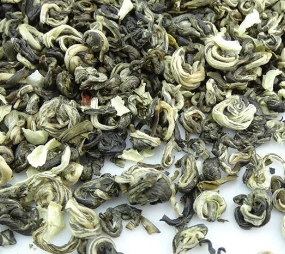

Flower - Infused Blooming Tea: Many blooming teas are infused with flowers such as chrysanthemum, jasmine, or rose. These flowers can also contribute to the color of the tea. For example, chrysanthemum flowers can give the tea a yellowish tint, while rose petals may add a pinkish hue. The combination of the tea leaves and the flowers creates a unique color palette in the brewed tea.
The Aesthetic and Sensory Experience
The color change during the brewing of Chinese Blooming Tea is not just a scientific phenomenon; it also adds to the overall aesthetic and sensory experience. Watching the tea ball unfurl and the water change color is like witnessing a small work of art in motion. The color of the tea can also influence our perception of its flavor. A lighter - colored tea may be associated with a more delicate and refreshing flavor, while a darker - colored tea may be perceived as having a stronger and more robust taste.
Moreover, the color of the tea can enhance the visual appeal of the tea - drinking experience. A beautifully brewed Chinese Blooming Tea, with its vibrant colors and unfurled flowers, can be a centerpiece on a tea table, making it a great choice for social gatherings or personal relaxation.
Conclusion and Call to Action
In conclusion, Chinese Blooming Tea does indeed change color during brewing, and this color change is influenced by various factors such as the chemical composition of the tea leaves and flowers, the type of tea, water temperature, and brewing time. Understanding these factors can help you brew the perfect cup of Chinese Blooming Tea, with the desired color and flavor.
If you are a tea lover or a business looking to source high - quality Chinese Blooming Tea, we would be delighted to assist you. We offer a wide range of blooming teas, each with its own unique color - changing characteristics and flavor profiles. Whether you are interested in green, black, oolong, or flower - infused blooming tea, we have the perfect product for you.
If you have any questions or would like to discuss potential purchases, please feel free to reach out to us. We are always happy to engage in discussions about our products and help you find the best tea solutions for your needs.
References
- "The Chemistry of Tea" by Tom Stobart
- "Tea: History, Terroir, Varieties" by Mary Lou Heiss and Robert J. Heiss
- "The World of Tea" by Jane Pettigrew and Bruce Richardson