


Hey there, tea lovers! As a blooming tea supplier, I get asked a ton about the best water temperature for brewing these beautiful tea blossoms. It's not just a random detail; the right water temp can make or break your tea - drinking experience. So, let's dive into the world of blooming tea and figure out what temperature is the sweet spot.
First off, what exactly is blooming tea? Well, it's a work of art. These tea balls are hand - tied with tea leaves and flowers. When you drop them into hot water, they unfurl like a little underwater ballet, revealing a stunning display of colors and shapes. And of course, they also release a delicious aroma and flavor.
Now, different types of blooming tea call for different water temperatures. Let's start with green tea - based blooming teas. Green tea is delicate, and if you use water that's too hot, you'll end up with a bitter, astringent brew. For green tea blooming teas, the ideal water temperature is around 175°F (80°C). This temperature allows the tea leaves to release their natural flavors and nutrients without getting over - extracted.
For example, our Rose Hydrangea Blooming Tea has a base of green tea. When you steep it at 175°F, you'll get a light, floral flavor with a hint of rose. The petals of the rose and the hydrangea will slowly open up, creating a beautiful sight in your teapot or cup.
Next up are oolong tea - based blooming teas. Oolong tea is a bit more robust than green tea, so it can handle slightly hotter water. Aim for a water temperature of about 190°F (88°C). This temperature will bring out the complex flavors of the oolong tea, which can range from fruity to nutty.
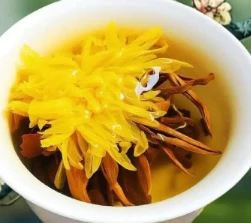
Our Golden Chrysanthemum Hydrangea Blooming Tea is an oolong - based tea. At 190°F, the chrysanthemum and hydrangea will open up, and you'll be greeted with a rich, smooth flavor that has a touch of floral sweetness.
Then we have black tea - based blooming teas. Black tea is the boldest of the bunch, and it can withstand boiling water, which is around 212°F (100°C). Using boiling water will extract the full flavor and strength of the black tea.
If you're a fan of pu'er tea, like our Xiao Qing Gan Chinese Pu're Tea, boiling water is also a great choice. Pu'er tea has a unique earthy flavor, and boiling water helps to bring out its depth and complexity.

But why does water temperature matter so much? Well, tea leaves are full of different compounds, like polyphenols, caffeine, and essential oils. These compounds are released at different rates depending on the water temperature. If the water is too cold, not enough of these compounds will be released, and your tea will taste weak. On the other hand, if the water is too hot, you might end up extracting too many bitter compounds, making your tea unpalatable.
Another thing to keep in mind is the steeping time. Generally, the hotter the water, the shorter the steeping time. For green tea blooming teas at 175°F, you might want to steep for about 2 - 3 minutes. Oolong tea at 190°F can be steeped for 3 - 4 minutes, and black tea or pu'er tea at boiling water can be steeped for 4 - 5 minutes.
But these are just general guidelines. You can always adjust the water temperature and steeping time based on your personal taste preferences. If you like your tea stronger, you can increase the steeping time or use a bit more tea. If you prefer a milder flavor, you can shorten the steeping time or use less tea.
Now, let's talk about how to get the right water temperature. If you have a fancy tea kettle with a temperature control feature, that's great. You can simply set it to the desired temperature. But if you don't, you can still estimate the temperature. For 175°F, bring the water to a gentle simmer, where small bubbles start to form at the bottom of the pot. For 190°F, the water should be just about to boil, with larger bubbles starting to rise. And for boiling water, well, you'll know when it's there - it'll be bubbling vigorously.
In addition to getting the right water temperature, it's also important to use good - quality water. Tap water can sometimes have impurities that can affect the taste of your tea. Filtered water or spring water is a better choice.
As a blooming tea supplier, I'm always happy to share my knowledge and help you get the most out of your tea. Whether you're a seasoned tea connoisseur or just starting to explore the world of blooming tea, I'm here to assist you. If you're interested in purchasing our blooming teas, we have a wide variety of options to choose from. Each tea is carefully crafted to provide you with a unique and enjoyable tea - drinking experience.
If you have any questions about our products, the best way to brew them, or just want to chat about tea in general, don't hesitate to reach out. We're always open to having a conversation with our customers and helping them find the perfect tea for their taste buds.
In conclusion, the right water temperature is crucial for brewing the perfect cup of blooming tea. By understanding the different temperature requirements for different types of blooming tea, you can enjoy a flavorful and aromatic cup every time. So, go ahead, experiment with different temperatures and steeping times, and find your ideal cup of tea.
References:
- "The Tea Enthusiast's Handbook" by Jane Pettigrew
- "All About Tea" by Theresa L. Hughey