


Hey there, tea lovers! As a Jasmine Aroma Tea supplier, I often get asked about the differences between Jasmine Aroma Tea and white jasmine tea. So, I thought I'd sit down and write a blog post to clear up any confusion.

Let's start with the basics. Both Jasmine Aroma Tea and white jasmine tea involve jasmine flowers, but they're made in different ways and have distinct characteristics.
How They're Made
White jasmine tea is crafted from white tea leaves. White tea is one of the least processed types of tea. The leaves are usually just withered and dried. To make white jasmine tea, fresh jasmine flowers are placed among the white tea leaves. As the flowers release their fragrance overnight, the tea leaves absorb the lovely jasmine scent. After that, the flowers are removed, leaving behind the tea leaves infused with the jasmine aroma.
On the other hand, Jasmine Aroma Tea can be made from different base teas like green tea, black tea, or even oolong tea. The process of scenting is quite similar to that of white jasmine tea. Fresh jasmine flowers are layered with the base tea leaves. The tea leaves soak up the jasmine fragrance, and then the flowers are taken out. You can find different varieties of Jasmine Aroma Tea, such as Jasmine Maofeng Tea and Jasmine Quhao Tea.
Appearance
When it comes to appearance, white jasmine tea has the natural look of white tea leaves. They're often pale green or silver - white in color and have a delicate, slender shape. The leaves look soft and unassuming, which is typical of white tea.
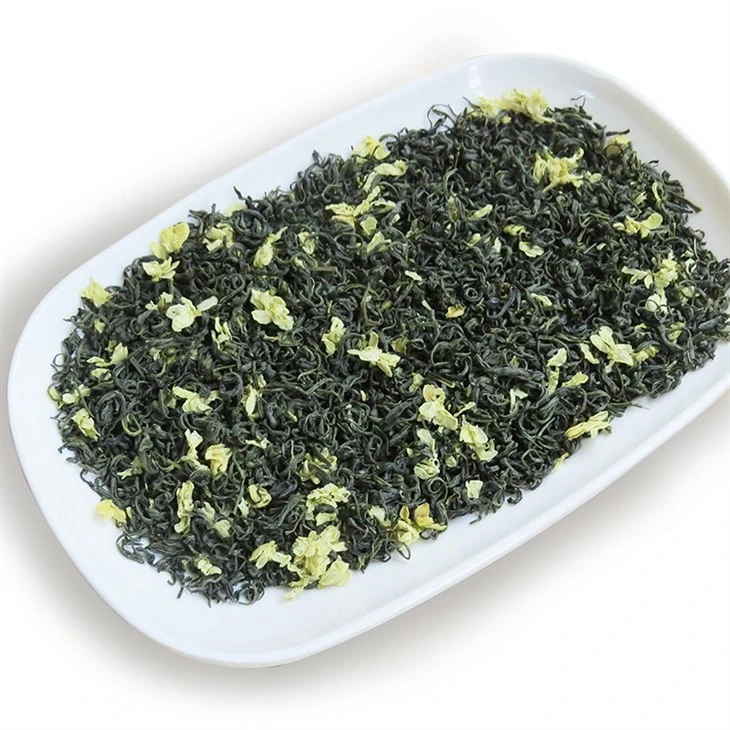
Jasmine Aroma Tea, depending on its base tea, has a wider range of appearances. If it's made from green tea, the leaves are usually bright green, with a more vibrant color compared to white tea. Green - based Jasmine Aroma Tea leaves are often well - rolled and have a smooth texture. Black - based Jasmine Aroma Tea has darker, almost blackish - brown leaves. Oolong - based Jasmine Aroma Tea has a unique appearance, with leaves that are partially oxidized, showing a mix of green and brown colors.
Aroma
The aroma is where both teas really shine, but in different ways. White jasmine tea has a very gentle, sweet, and floral aroma. The jasmine scent is soft and subtle, complementing the natural, light grassy notes of the white tea. It's like a gentle spring breeze carrying the fragrance of jasmine flowers.
Jasmine Aroma Tea, however, can have a more intense and complex aroma. If it's made from green tea, the jasmine scent combines with the fresh, vegetal aroma of the green tea. You might notice hints of seaweed or freshly cut grass along with the strong jasmine fragrance. Black - based Jasmine Aroma Tea has a richer, more robust aroma. The jasmine scent blends with the malty and sometimes chocolatey notes of the black tea. Oolong - based Jasmine Aroma Tea offers a balanced aroma, with the floral jasmine scent mixing with the fruity and slightly roasted notes of the oolong tea.
Taste
The taste of white jasmine tea is light and refreshing. It has a mild, sweet flavor with a clean finish. The white tea base gives it a smooth and delicate mouthfeel. You can taste the gentle jasmine flavor throughout, but it never overpowers the natural taste of the white tea.
Jasmine Aroma Tea has a more diverse taste profile. Green - based Jasmine Aroma Tea is fresh and lively. The jasmine adds a sweet, floral dimension to the fresh, slightly bitter taste of the green tea. It's a great choice if you like a more invigorating tea. Black - based Jasmine Aroma Tea has a stronger, bolder taste. The jasmine softens the sometimes harsh edge of the black tea, and you get a combination of sweet jasmine and malty black tea flavors. Oolong - based Jasmine Aroma Tea offers a well - rounded taste, with the jasmine enhancing the complex flavors of the oolong, such as honey, nuts, and fruits.
Health Benefits
Both teas have their own set of health benefits. White jasmine tea, being based on white tea, is rich in antioxidants. These antioxidants can help protect your cells from damage, reduce the risk of chronic diseases, and boost your immune system. The jasmine in it also has some calming properties, which can help you relax and reduce stress.
Jasmine Aroma Tea, depending on its base tea, also has health benefits. Green - based Jasmine Aroma Tea contains catechins, which are known for their anti - inflammatory and weight - management properties. Black - based Jasmine Aroma Tea can improve heart health and aid in digestion. Oolong - based Jasmine Aroma Tea can help with metabolism and blood sugar control. The jasmine in all these varieties adds its own health - promoting elements, such as antibacterial and antifungal properties.
Caffeine Content
White jasmine tea has a relatively low caffeine content. White tea generally has less caffeine than other types of tea, so the resulting white jasmine tea is a great option for those who are sensitive to caffeine or want a calming drink in the evening.
Jasmine Aroma Tea's caffeine content varies depending on the base tea. Green - based Jasmine Aroma Tea has a moderate amount of caffeine, which can give you a gentle energy boost. Black - based Jasmine Aroma Tea has a higher caffeine content, similar to regular black tea. It can be a good pick - me - up in the morning. Oolong - based Jasmine Aroma Tea has a caffeine level that falls somewhere between green and black tea.
Brewing Tips
For white jasmine tea, use water that's around 175°F (80°C). Steep the tea for about 3 - 5 minutes. Using too hot water can make the tea taste bitter. You can enjoy white jasmine tea multiple times by re - steeping the leaves.
When brewing Jasmine Aroma Tea, the brewing process depends on the base tea. For green - based Jasmine Aroma Tea, use water at around 175°F (80°C) and steep for 2 - 3 minutes. Black - based Jasmine Aroma Tea can be brewed with boiling water (212°F or 100°C) for 3 - 5 minutes. Oolong - based Jasmine Aroma Tea requires water at about 195°F (90°C) and a steeping time of 3 - 4 minutes.
Which One to Choose?
If you prefer a light, gentle, and subtly flavored tea, white jasmine tea is a great choice. It's perfect for relaxing evenings or when you want a tea that's easy on the taste buds.
If you like a more intense, complex, and diverse flavor profile, then Jasmine Aroma Tea is the way to go. You can choose the base tea according to your caffeine preference and taste preferences. Whether it's the fresh green tea base, the robust black tea base, or the balanced oolong tea base, there's a Jasmine Aroma Tea for everyone.
As a Jasmine Aroma Tea supplier, I'm passionate about sharing the wonderful world of Jasmine Aroma Tea with you. If you're interested in trying out our high - quality Jasmine Aroma Tea, including Jasmine Aroma Tea and other varieties, I'd love to talk to you. Whether you're a tea shop owner looking to stock up or an individual who wants to explore new teas, we can have a great discussion about your needs. Reach out to start a conversation about purchasing and let's find the perfect Jasmine Aroma Tea for you.
References
- "The Book of Tea" by Kakuzo Okakura
- "All About Tea" by Joseph Harbowy and Robert Stevenson
- Various tea research articles from scientific journals on tea properties and processing.